

(Benign Paroxysmal Positional Vertigo)
What is BPPV?
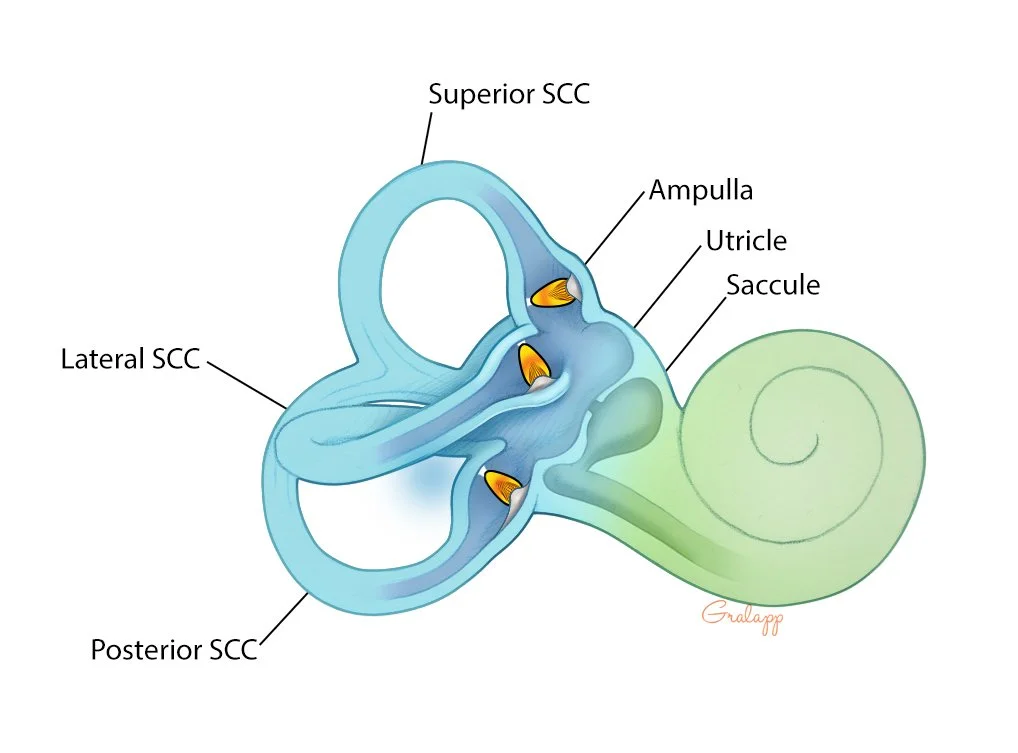
Benign Paroxysmal Positional Vertigo - A Common Cause of Vertigo and Dizziness
If turning over in bed, tilting your head back to look at a high shelf, or bending down to tie your shoes causes the room to start spinning, you might be experiencing BPPV.
BPPV is the most common cause of inner ear dizziness. While the spinning feeling can be scary and unsettling, the good news is that it is very common and extremely treatable. St. John’s has a population that skews older - which makes it even more common for people in St. John’s (and Newfoundland & Labrador as a whole) to experience BPPV.
How Does BPPV Make Me Dizzy? (The "Loose Crystals" in Your Ear)
Deep inside your ear, you have a tiny balance system filled with fluid and microscopic calcium particles—often called "ear crystals."
Normally, these crystals stay glued in place to help your brain detect gravity and motion. But sometimes, due to a head bump, aging, an inner ear infection, or for no reason whatsoever - crystals can go out of place.
When loose crystals float into the fluid-filled canals of your inner ear, they move around whenever you change head positions. This sends confusing signals to your brain—your brain thinks the room is spinning, even though your body is sitting still.
What Does the Name BPPV Mean?
Though the medical term sounds long, it breaks down into simple terms:
Benign: It is not an immediately dangerous or terminal disease.
Paroxysmal: The spinning comes on in sudden, short bursts.
Positional: It is triggered by moving your head into specific positions.
Vertigo: The sensation that you or the room around you is spinning.
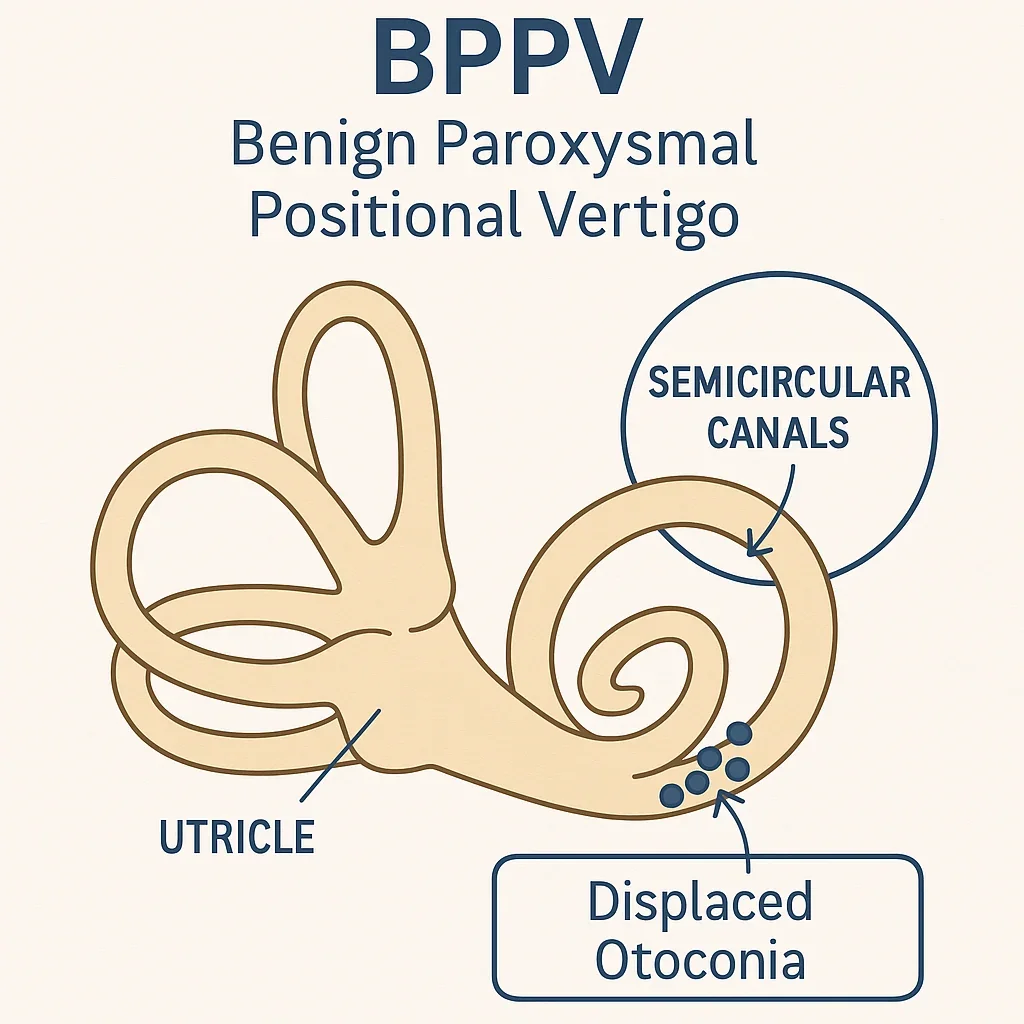
How Can I Make The Spinning Stop?
Getting a professional vestibular physiotherapy assessment is the safest and fastest way to get relief.
Here’s why a proper assessment matters:
Not All Vertigo is BPPV: Other inner ear or neurological conditions can mimic BPPV. An assessment makes sure we treat the actual cause of your dizziness.
Finding the Right Ear and Canal: You have three different canals in each ear. The treatment movement depends entirely on which ear and which canal the crystals are stuck in.
Preventing Unnecessary Dizziness: Trying maneuvers without knowing your exact type of BPPV can move the crystals into the wrong canal, making your vertigo worse.
Individual Semicircular Canal Variances: Just like people have different size shoes, people have different shaped semicircular canals. One maneuver may be effective for some people but may not work on others. Our vestibular physiotherapist at Anchor Physiotherapy can perform multiple different maneuvers for each semicircular canal.
Our lead vestibular physiotherapist Brent Wareham holds a certificate in Vestibular Rehabilitation from Duke University School of Medicine. He has years of experience dealing with multiple different causes of vertigo - especially BPPV.
How a Vestibular Physiotherapist Can Help
Treating BPPV does not involve medication or surgery. Instead, a specialized vestibular physiotherapist uses precise, gentle head movements—known as canalith repositioning maneuvers to guide the loose crystals out of the canal and back to where they belong.
When done correctly by a trained physiotherapist:
Relief is Effective: Many people respond quickly to treatment. The quicker you are to get assessed and come in for treatment, the quicker it is resolved.
It’s Gentle & Guided: We walk you through every step at your pace, keeping you safe and comfortable throughout the process.
Stop the Spinning—Get Relief Today
You don’t have to guess or deal with sudden spinning spells. Let us identify the exact cause of your dizziness and help you get back to feeling steady.

Brent Wareham
Registered Physiotherapist with Certificate in Vestibular Rehabilitation
🎓MSc. PT Queen’s University
🎓Certificate in Vestibular Rehabilitation, Duke University School of Medicine